


Lordrush
4.4765.00 Reviews
App Specs
- Version
- Varies with Device
- Updated On
- License
- Free
- Downloads
- 1,000,000+
- Developer
- Century Games Innovation Pte. Ltd.
- Categories
- Strategy
- Platform
- Android
Screenshots

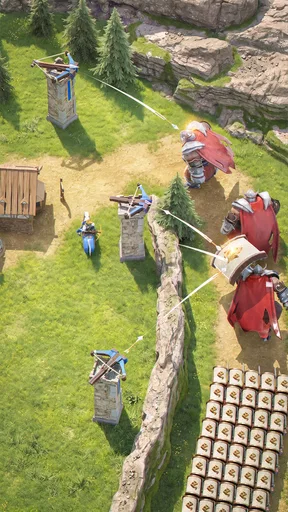

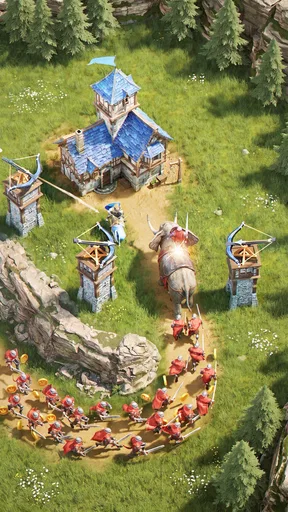
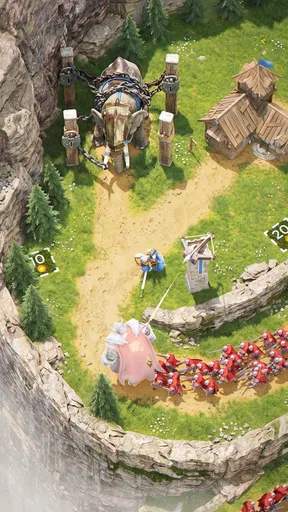
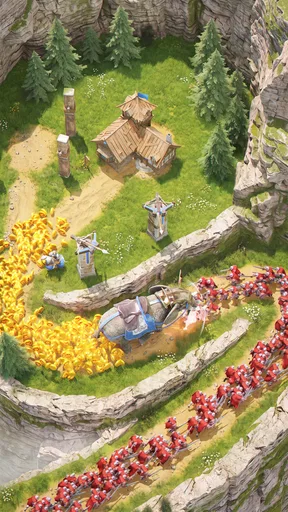

 Analysis by AppCompare
I like the idea behind Lordrush: a medieval strategy game built around defending against incoming threats, where the appeal is in thinking ahead rather than simply reacting. That kind of game can make a short break feel satisfying, but only when its decisions are clear and each attempt teaches you something. My overall impression is that this is a title to approach as a focused tower-defense pastime, not as a sprawling strategy world with a long list of established systems.
That distinction matters when deciding whether to install it. Lordrush is free to download, has an Everyone age rating, and comes from Century Games Innovation Pte. Ltd. Its audience response is encouraging, with a 4.4 average from roughly 93,000 ratings, while its reach has passed a million installs. Those figures suggest a substantial audience, but they do not tell me whether its particular pace and level of challenge will suit you. The useful question is whether you enjoy making compact defensive choices and repeating a stage to improve your approach.
What the current game offers
The game is categorized as strategy, and its medieval tower-defense premise puts it in a familiar but appealing corner of mobile gaming. In this genre, the satisfaction usually comes from reading the shape of an attack, deciding where defense matters most, and adjusting when a plan that looked sound turns out to be too thin. Lordrush is best considered through that lens: its central promise is tactical defense, rather than exploration, narrative role-play, or a broad simulation.
I would recommend it first to players who enjoy games that reward attention in short sessions. A tower-defense match is a natural fit for a commute, a quiet wait, or a break between other tasks because the basic goal is easy to understand. The trade-off is that “easy to pick up” does not necessarily mean effortless. If you dislike losing a run because you placed resources or defenses poorly, this style can feel demanding rather than relaxing.
One practical way to get more from a defensive strategy game is to treat the first attempt as reconnaissance. Instead of spending every available resource immediately, watch where pressure builds and note which part of your setup is exposed. On a replay, make one deliberate change rather than rebuilding everything at once. That gives you a clearer sense of whether the problem was placement, timing, or an assumption about the incoming route. It is a more useful habit than repeating the same approach and hoping for a different result.
That method also helps keep the game from becoming a reflex test. The strongest tower-defense decisions are often made before the most hectic moment: preserving flexibility, avoiding an over-investment in one area, and leaving yourself room to respond when the battlefield changes. I find that this kind of deliberate play is where the genre becomes genuinely strategic. If Lordrush’s levels encourage that style, patient players are likely to get more satisfaction than people who only want quick, low-stakes tapping.
How it fits among mobile strategy games
Compared with the usual alternatives, Lordrush appears aimed at a more contained experience than a large kingdom-building game. It is a better match for someone who wants the central problem to be defending a position, rather than managing a town, joining a social alliance, or checking in repeatedly to oversee long-running upgrades. That focus can be a strength: fewer kinds of tasks make it easier to concentrate on the tactical puzzle in front of you.
Worth Reading Before You Choose

Flipboard Shows What News Apps Must Do Beyond the Feed

Switching to Android Auto Means Rethinking Your Driving Routine

Google Calendar Makes a Crowded Week Easier to Manage

Ludo King Makes the Most of the Minutes Between Plans

Baby Panda World Brings Quick Play to Modern Phones, but Its Game Library Feels Busy

ESPN’s Live Game View Makes Following Close Games Easier
It is not automatically the better choice for every strategy fan. Players who want extensive base customization, a deep campaign, or a persistent world to tend between sessions may prefer a broader strategy game. Likewise, someone who enjoys real-time competition against other players may find a defense-centered format less compelling if what they really want is to outthink a human opponent. I would choose Lordrush for a specific tower-defense mood, not as a universal replacement for every mobile strategy game.
A useful everyday scenario is playing one stage while waiting for an appointment, then stopping once you have identified a better layout for your next try. That works better than beginning a session when you have only a few distracted seconds and expect to make every decision well. Strategy games can punish divided attention: a missed cue or rushed choice may make a loss feel arbitrary. Giving a stage a little focused attention makes it easier to learn from the outcome, even if the session itself is brief.
Release details and what they establish
Lordrush is listed as released on June 16, 2026, and its minimum operating-system requirement is Android 7.0. Those details establish the release timing and a baseline for Android compatibility; they do not, by themselves, demonstrate a particular feature set or a sequence of updates. I would not read a release date as proof that the game has already undergone major changes, nor assume that a newer release automatically means its systems are still evolving in a particular direction.
The available release facts give existing players a useful point of reference, but not a before-and-after account of gameplay. There is no verified feature history here that would let me claim a new mode, balance revision, or interface improvement arrived in a specific update. For a prospective player, the practical takeaway is modest: this is a recent release, so the product’s longer-term shape may become clearer with time, but expectations about future content should remain expectations, not promises.
If you already play, that means the safest way to judge the game is by what you can actually access in your current installation, rather than by assuming the release date guarantees a particular roadmap. If you are considering a first download, you can evaluate the core experience on its own merits. I would pay attention to whether the defensive choices feel understandable and whether a failed attempt points toward a better plan. Those are stronger indicators of a satisfying tower-defense game than speculation about what might be added later.
Spending, pacing, and sensible expectations
The game is free to start, with in-app purchases priced from $0.99 to $99.99 per item. That is a wide range, so I would treat optional spending carefully and decide on a personal limit before buying anything. A free download does not mean every later purchase is necessary, and a high-priced item does not automatically improve the strategic experience. If you are mainly interested in the defense puzzle, first establish whether the basic play is enjoyable without paying.
For parents, the Everyone rating is a helpful starting point when considering suitability, but it is still sensible to review the purchase settings on the device. The age rating and the presence of in-app purchases answer different questions: one concerns the intended content audience, while the other concerns spending opportunities. I would set purchase controls in advance for a child’s device, especially when a game can be installed without an upfront price.
There is also a pacing trade-off worth considering. Tower defense can feel rewarding when a run is short enough to replay, but repetitive if progress depends on doing the same thing without meaningful decisions. When trying Lordrush, I would ask whether each retry changes your understanding of the defense problem. If you can identify a concrete adjustment after a loss, the loop is doing useful work. If attempts feel interchangeable, a puzzle game or a more varied strategy title may be a better use of your time.
What may frustrate players
The most likely friction is inherent to the format: defensive planning can become punishing when a player does not yet understand why a setup failed. A difficult stage is satisfying only when the cause of failure feels legible. My advice is to change one part of your approach at a time and give yourself a moment to observe what happens, rather than spending impulsively or blaming every loss on luck. That approach is especially useful if you prefer games that teach through experimentation.
Another limitation is fit. If your favorite strategy games are about diplomacy, collecting, or a persistent community, a medieval defense game may feel narrow even when its core is enjoyable. And if you want something completely passive, tower defense is not ideal: the whole point is to pay attention to threats and make choices. I would skip it if you know you dislike replaying levels, managing pressure, or learning through setbacks.
The rating count and install reach indicate that many people have tried it, but popularity is not a substitute for your own preferences. Ratings can help you see that the game has found an audience; they cannot tell you whether you will enjoy its particular challenge. I would use the free entry point to make that decision without treating purchases as part of the test. Start with the basic experience, notice how the game handles a failed attempt, and decide whether the next try sounds interesting rather than obligatory.
Who I would recommend it to
I would point Lordrush toward someone who likes medieval themes, compact tactical problems, and the feeling of improving a defense after seeing it fail. It is especially suitable for players who can give a stage a little focus and enjoy testing a revised plan. The less obvious benefit of that approach is that it turns a brief session into a small experiment: observe the pressure point, change one decision, and compare the result. That makes even a short play session feel more purposeful.
I would steer away anyone looking for a large narrative adventure, a cooperative social experience, or a strategy game whose main attraction is building a persistent empire. Those are different pleasures, and the tower-defense premise does not promise them. I would also be cautious if you find retries frustrating or are uncomfortable with games that present optional purchases. In those cases, another genre—or a strategy title with a different emphasis—would be a more natural fit.
My take after weighing the choice
My recommendation is a measured one: Lordrush is worth considering if the idea of defending against medieval threats sounds fun in its own right. Its free starting point lowers the barrier to trying it, while the purchase range is a reason to keep spending deliberate rather than automatic. The release information establishes when it arrived and the Android baseline, but it does not justify assuming a particular evolution or future plan. I would judge it by the quality of the decisions available in the version you can play.
For me, the best reason to try it is the chance to turn a failed defense into a smarter second attempt. The clearest reason not to is if you want a broader, more social, or more forgiving kind of strategy game. Lordrush makes the most sense as a focused tower-defense option for patient players who enjoy learning a battlefield one decision at a time. If that describes you, it is a sensible free game to test; if not, its medieval framing alone probably will not change your mind.
Pros
- Quick matches make it easy to play in short sessions.
- Distinct units add variety to tactical decisions.
- The fantasy setting gives battles a clear visual identity.
- Progression provides goals beyond individual matches.
- Free-to-play access lets players try the game before spending.
Cons
- Progress may feel slow without regular play.
- Some upgrades can create an advantage for paying players.
- Repeated battle formats may become predictable over time.
- Small-screen controls can make precise actions tricky.
- Online play depends on a stable internet connection.
FAQs for Lordrush
What is Lordrush, and what kind of gameplay does it offer?
Lordrush is presented as a fantasy-themed game centered on building power and taking part in battles, but its exact features can vary by version and platform. Before downloading, check the store listing for screenshots, gameplay details, and recent updates so you know whether it focuses on strategy, role-playing, action, or another style. That will help you decide if its pace and mechanics suit you.
Is Lordrush free to download, and does it include in-app purchases?
The download price and available purchases can differ between the Android and iOS versions, and may also change over time. Review the listing on your device’s official app store for the current price, in-app purchase details, and any subscription terms. If purchases are available, check whether they are optional extras or affect progression, and use device-level purchase controls if children may play.
Can I play Lordrush offline, or does it require an internet connection?
Whether Lordrush works offline depends on its current version and the features you want to use. Games with online battles, account syncing, events, or multiplayer modes generally need a reliable connection, while some activities may be available without one. Check the store description and in-game guidance before relying on offline play, especially if you expect to play while traveling or have limited mobile data.
Which devices support Lordrush, and how much storage does it need?
Compatibility depends on the specific release, your operating system, and the device’s hardware. Check Lordrush’s current Google Play or App Store page for its minimum OS requirements, supported devices, and download size. Keep in mind that the app may use additional storage for updates or downloaded game content, so having free space and installing the latest system updates can help avoid installation problems.
Is Lordrush safe for children, and what privacy or account details should I check?
Before a child plays, review the age rating, content description, and privacy information shown on the official store listing. Also check whether Lordrush includes chat, online interaction, advertising, analytics, or in-app purchases, since these features can affect a child’s experience. Download only from an official store, and use parental controls to manage purchases, screen time, and access to online features where available.


